

The Vitamin That Secretly Affects Your Mood

We usually think about vitamins in terms of immunity, bones, or energy. But what if one of the most overlooked nutrients is actually influencing how you feel day to day—your mood, your sleep, even your cravings?
Surprisingly, that nutrient is vitamin D.
And here’s the twist: despite living in a modern world with access to plenty of food and supplements, a large portion of people-especially in the U.S.-still don’t get enough of it.
Why Vitamin D Matters More Than You Think
Vitamin D isn’t just “another vitamin.” It behaves more like a hormone in the body, influencing multiple systems-including the brain.
Research suggests that vitamin D plays a role in how key areas of the brain function—especially those involved in:
Mood regulation
Memory
Stress response
When levels are low, people often report:
Fatigue
Low mood
Increased sensitivity to stress
It’s subtle, but over time, it can make a real difference in how you feel.
The Link Between Vitamin D, Serotonin, and Sleep
One of vitamin D’s most interesting roles is its connection to serotonin-the neurotransmitter often called the “feel-good chemical.”
Serotonin helps regulate:
Mood
Sleep quality
Appetite
When serotonin levels drop, you might notice:
Poor sleep
More cravings for sugar and carbs (especially at night)
Feeling “off” emotionally
Vitamin D helps support the brain’s ability to produce serotonin, which is one reason low levels may be linked to mood dips and restless nights.
Stress, Cortisol, and That “Always On Edge” Feeling
When you’re under stress, your body releases cortisol. In the short term, that’s helpful - it keeps you alert and responsive.
But when cortisol stays elevated for too long, it can lead to:
Ongoing tension
Difficulty relaxing
Negative effects on overall health
Vitamin D appears to help regulate this stress response system. When levels are adequate, your body may recover from stress more efficiently.
When they’re not? That “wired but tired” feeling can stick around longer than it should.
Vitamin D and Calcium: More Than Just Bone Health
Most people associate vitamin D with calcium - and for good reason.
Vitamin D helps your body:
Absorb calcium from food
Maintain stable calcium levels in the blood
If calcium levels drop, your body may pull calcium from your bones to compensate. Vitamin D helps prevent that process, supporting bone strength over time.
But here’s something many people don’t realize:
More vitamin D isn’t always better.
Studies show that taking very high doses doesn’t dramatically improve calcium absorption in healthy individuals. In fact, the benefit can be surprisingly small—sometimes comparable to what you’d get from a small dietary change, like adding a serving of milk.
The goal isn’t “as much as possible.” It’s getting into the optimal range.
How Much Vitamin D Do You Actually Need?
Vitamin D can be listed in two units, which often confuses people:
IU (International Units)
mcg (micrograms)
Here’s the simple conversion:
1 mcg = 40 IU
General recommendations:
Adults up to age 70: 600 IU (15 mcg) daily
Adults over 70: 800 IU (20 mcg) daily
Examples:
25 mcg = 1,000 IU
50 mcg = 2,000 IU
Can You Get Enough From Food?
It’s possible—but not easy.
Here’s roughly what common foods provide:
Salmon (one serving): ~50% of daily needs
Sardines (one can): ~20%
Tuna (one can): ~15%
Egg yolk (one egg): ~40 IU
That last one puts things into perspective—you’d need around 20-25 eggs a day to reach 1,000 IU. Not exactly practical.
Fortified foods (like milk or plant-based alternatives) can help, but diet alone often falls short.
What About Sunlight?
Vitamin D is unique because your body can produce it when your skin is exposed to UVB sunlight.
But here’s the reality for many Americans:
Long hours indoors
Office jobs
Driving instead of walking
Sunscreen use (which blocks UVB)
All of this limits natural production.
So how much sun do you need?
In summer: about 10-20 minutes of sun exposure on arms and legs can be enough for many people
In winter: significantly more exposure may be needed (and in some regions, production is minimal)
Even short, consistent exposure-like walking outside during the day—can make a difference.
How to Check Your Vitamin D Levels
A simple blood test can give you a clear answer.
Look for:25-hydroxyvitamin D (25(OH)D)
General reference ranges:
Below 20 ng/mL - Deficient
20–30 ng/mL - Insufficient
30–50 ng/mL - Adequate
Above 50 ng/mL - Optimal
Above 100 ng/mL - Potentially excessive
Should You Consider a Supplement?
For many people, the answer is yes—especially during:
Winter months
Periods of limited sun exposure
Busy indoor lifestyles
Even with a healthy diet, reaching optimal levels through food alone is difficult.
That said, supplementation should be balanced, not excessive.
A Smarter Approach to Vitamin D Supplementation
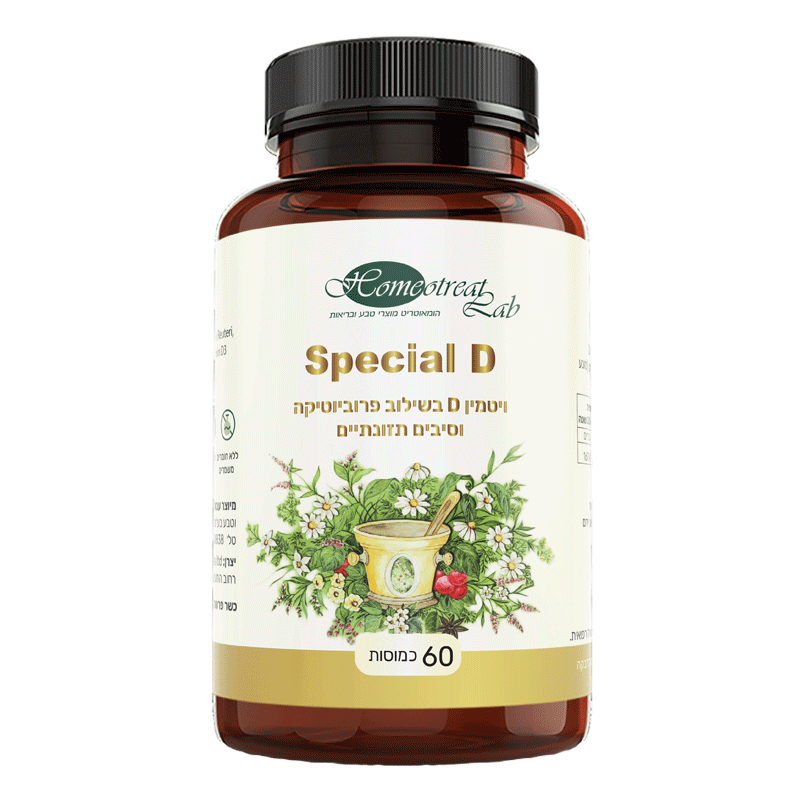
Not all vitamin D supplements are created equal. While many simply provide vitamin D, some newer formulas are designed to improve how your body actually absorbs and utilizes it.
One example is Special D - a formula that focuses not just on intake, but on bioavailability and activation within the body.
What makes it different?
May help increase vitamin D levels within weeks
Supports absorption and activation in the gut
Designed to work even in cases of impaired fat absorption (such as after gallbladder removal)
Combines digestive support with nutrient delivery
Key ingredients:
Vitamin D3 (Cholecalciferol): The most bioavailable form of vitamin D
L. reuteri (Probiotic): Supports vitamin D activation and overall gut health
Soluble Dietary Fiber: Helps improve digestion and enhances nutrient absorption
Instead of relying on higher and higher doses, this kind of approach focuses on helping your body make better use of the vitamin D you’re already taking - something that can make a meaningful difference over time.
The Bottom Line
Vitamin D doesn’t get as much attention as it deserves when it comes to mood, stress, and overall well-being.
But maybe it should.
If you’ve been feeling:
More tired than usual
Slightly off emotionally
Stressed and not fully recovering
…it might not just be your schedule or lifestyle.
Sometimes, it’s something as simple - and as fixable - as your vitamin D levels.
Getting enough isn’t about megadoses or complicated routines. It’s about consistent, balanced support - from sunlight, food, and when needed, smart supplementation.



Comments