

The Myth of the Big Number: Why Curcumin Bioavailability Matters More Than Dosage
Understanding the Bioavailability Barrier
Many supplements fail not because the dosage is low, but because the human body cannot absorb the active compounds. Bioavailability refers to the fraction of a nutrient that actually reaches systemic circulation. When a supplement is poorly absorbed, even a high-dosage product will likely be excreted before it can provide any therapeutic benefit.
Case Study: Curcumin vs. Turmeric Powder
Standard turmeric powder is notoriously difficult for the body to absorb. High dosages of generic powder are frequently metabolized and eliminated before they can reach the bloodstream. Effective formulations prioritize two things:
Standardized Curcuminoids: Ensuring the extract contains 95% active curcuminoids rather than just generic turmeric dust.
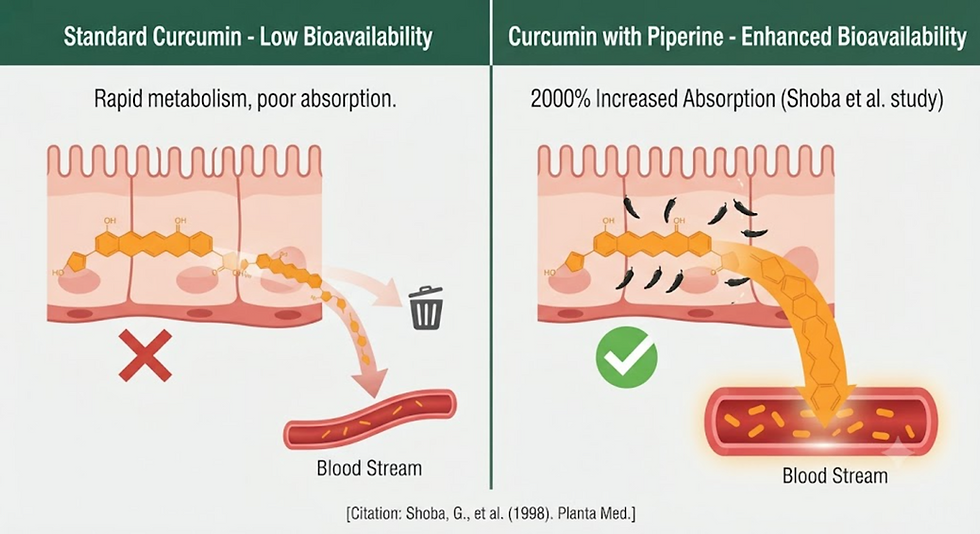
Absorption Enhancers: Pairing curcumin with compounds like piperine (black pepper extract) to inhibit the body’s rapid breakdown of the nutrient.
Clinical Evidence and Synergistic Efficacy
Quality is defined by evidence-based synergy. Scientific studies confirm that curcumin's bioavailability is significantly limited by rapid metabolism [1]. Research demonstrates that piperine can increase curcumin bioavailability by up to 2000% [2]. Furthermore, a multi-pathway approach - combining curcumin with other botanical extracts like Boswellia Serrata - is supported by meta-analyses in treating chronic inflammatory conditions, proving that a thoughtful formulation often outperforms a single high-dose ingredient [3].
The Quality Comparison Framework


Comments